



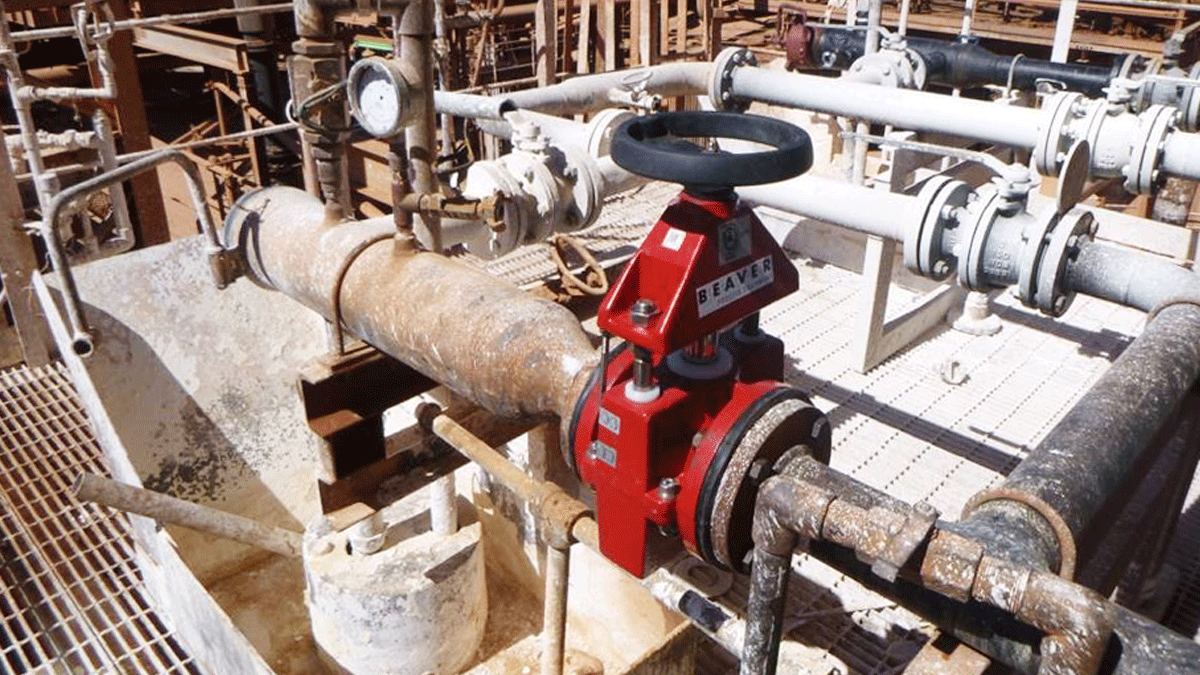
Slurry valves are often the last thing specified on a new project and the first thing the maintenance team is dealing with once the plant is running. A valve that performs fine on clean water will fail inside six weeks in a dense slurry line.
Getting the selection wrong doesn't just create a maintenance headache. It creates a pattern: emergency replacements between shutdowns, supply chain problems, downstream pipe erosion from throttled-valve jet damage.
This guide covers how pinch valves work, where they outperform other slurry valve types, what to nail down in a specification, and why a WA lithium mine achieved 12× longer service life by switching from diaphragm valves to custom pinch valves.
Why Slurry Valves Fail — And Why Selection Matters
The Standard Failure Modes
Most process valves are designed for clean or lightly contaminated fluid. In abrasive slurry service (iron ore tailings, lithium spodumene, copper concentrate, gold leach residue), solid particles attack every internal surface the fluid contacts. Seals, seats, discs, diaphragms: all wear, and wear compounds fast at elevated velocity. The failure modes are predictable.
Diaphragm valves: The diaphragm degrades from abrasion and chemical attack. In the worst cases, the material isn't compatible with the slurry chemistry. The valve fails for reasons that have nothing to do with particle wear. At a WA lithium mine, FeSi downcomer diaphragms lasted just 7–8 weeks against 20-week shutdown intervals, forcing repeated emergency mid-campaign replacements.
Butterfly valves: The disc sits permanently in the flow path. In abrasive slurry, the disc and seat erode continuously. Tight shutoff degrades well before the valve needs mechanical replacement, and the leakage problem grows gradually until it becomes a process control issue.
Gate valves: Built for on/off service on clean lines. In slurry, particles pack into the gate cavity, jamming the valve open or grinding the seating surface to the point where shutoff is no longer possible.
The Cv Problem
There's a secondary failure mode that's less obvious but often more damaging: slurry valves run in a nearly-closed position. A full-bore valve trying to achieve a low flowrate has to be throttled almost shut. Slurry exits through the narrow gap at high velocity, eroding the downstream pipework fast and often causing more damage than the valve itself.
Getting the flow coefficient (Cv) right matters as much as getting the material right. A valve specified correctly for the flowrate operates comfortably in its mid-range. It lasts longer, controls better, and stops destroying the pipe after it.
How Pinch Valves Work
A pinch valve controls flow by compressing a flexible elastomer sleeve. When the valve opens fully, the sleeve returns to its natural bore. Flow passes through an unobstructed tube with no disc, no gate, no seat in the flow path. When closing, two pinch bars on opposite sides of the sleeve mechanically compress it until the sleeve walls meet and seal.
That clean-bore design is the core advantage. Slurry travels through a smooth tube with nothing to catch particles or create turbulence zones. The sleeve is the only wear component. Everything else is protected from the media by the sleeve itself.
The sleeve compound is matched to the service conditions. Defender Grade A rubber handles high-wear abrasive slurry. Specialty compounds are available for chemically aggressive carriers: acid leach circuits, cyanide solutions, copper sulfate environments. Getting the sleeve compound matched to the chemistry is as important as the geometry.
Advantages of Pinch Valves in Abrasive Slurry Applications
Clean bore when open. No internal obstructions, no turbulence zones, no dead spots where particles can pack and jam. For abrasive slurry service, this isn't a minor advantage: it's the difference between a valve that reaches shutdown and one that fails in week six.
Onsite sleeve replacement. The sleeve is the only component in contact with the slurry. When it wears, the sleeve is replaced. The valve body stays in the line. No specialist tooling, no extended outage, no removing the valve from the piping. A maintenance crew can do it on shift. For remote WA operations with tight FIFO rosters and infrequent shutdown windows, that matters.
Customisable Cv. The sleeve internal diameter can be specified to match the required flowrate. Rather than running a full-bore valve almost closed, the sleeve ID is sized so the valve operates in its mid-range: better flow control, no high-velocity downstream damage.
Low pressure drop when open. Full bore or near-full bore operation means minimal restriction on open lines. For dense-phase slurry where maintaining transport velocity prevents settling, this keeps the hydraulics clean.
High pressure slurry valve capability. The Defender PB-H series is rated to 20 bar (290 psi), covering high pressure slurry valve applications in pressurised cyclone feeds, dense medium circuits, and high-pressure tailings lines where standard 10-bar valve ratings aren't sufficient.
Broad actuator compatibility. Defender pinch valves can be fitted with manual (handwheel or gearbox), pneumatic, electric, or hydraulic actuators. Limit and proximity switches, positioners, and standard pneumatic and electric interfaces allow integration with existing process control systems.
Pinch Valve Selection: What to Nail Down
Pinch valves don't suit every slurry duty. Here's the decision framework.
Where pinch valves are the right call:
• Dense slurry control applications: dense medium separation, FeSi circuits, classifier overflow and underflow
• Lines where downstream pipe wear from throttled-valve jetting is a known problem
• Applications requiring frequent sleeve maintenance without full valve removal
• Chemically aggressive slurries where standard valve internals aren't compatible
• Remote sites where simple onsite maintenance without specialist support is the priority
Where other slurry valve types are better suited:
• Full-bore isolation on large tailings lines: knife gate valves handle coarse high-solids content better than pinch valves above DN300, where closure force against coarse particles becomes a limitation
• Simple on/off gravity lines with very coarse particle loads: a knife gate in full-open position offers less restriction to coarse solids
Key specification parameters:
| Parameter | Why It Matters |
|---|---|
| Slurry solids content (% w/w) | Affects sleeve compression force and closure reliability |
| Particle size and shape | Coarse angular particles accelerate sleeve wear |
| Operating pressure | Selects PB (10 bar) vs PB-H (20 bar) series |
| Required Cv / flowrate | Determines optimal sleeve ID; don't default to line size |
| Chemical environment | Selects sleeve compound: Grade A for abrasion, specialty for acid/cyanide |
| Actuation | Manual, pneumatic, electric, or hydraulic |
| Size range | DN50–600 standard; custom available |
| Flange standard | AS2129, ASME, BS, SABS, DIN |
The Defender Pinch Valve Range
Beaver's Defender PB and PB-H open body double-ended pinch valves are built specifically for slurry control in mineral processing. DN50–600 as standard. The sleeve is manufactured in BPE's own mining hose factory, using the same rubber compounding as Slurryflex hose rather than buying in from a general hose supplier.
The PB series handles up to 10 bar. The PB-H is the high pressure slurry valve variant, rated to 20 bar for applications where standard pinch valve pressure ratings aren't adequate. Custom sizes, face-to-face dimensions, and sleeve compounds are available.
Custom engineering is a genuine option. At the WA lithium mine, a modified Defender frame allowed two valves to run parallel in the existing piping footprint. No pipework redesign, no additional installation cost. The custom sleeve ID eliminated the Cv mismatch that had been causing high-velocity downstream erosion from the old diaphragm valves.
Case Study: WA Lithium Mine — 12× Wear Life in FeSi Slurry
The clearest example of what Defender pinch valves deliver in practice is a 2022 engagement at a WA lithium mine.
The reliability team was dealing with diaphragm valves in FeSi downcomer lines lasting just 7–8 weeks, against 20-week shutdown intervals. Multiple emergency replacements per campaign. The situation reached a breaking point when the team tried to order replacements and found they had exhausted available supply across Australia.
BPE went on site and identified three root causes. The diaphragm material wasn't compatible with the slurry chemistry. The full-bore valve design required extreme throttling to achieve the required flowrate. The high-velocity exit from the nearly-closed valve was eroding downstream pipework.
The fix was a custom Defender pinch valve designed to fit the existing piping footprint. No redesign needed. Sleeve compound matched to the FeSi chemistry. Reduced sleeve ID for proper flow control without throttling. A modified frame allowed two valves to sit parallel where the single diaphragm valve had been.
Valve service life went from 7 weeks to over 18 months. 12× better wear life. The valves now make it to multiple shutdown intervals without emergency replacement.
Valve Specification and Support
Getting slurry valves right at the specification stage is cheaper than getting them wrong in service. BPE offers three services covering different points in the process.
Valve specification reviews work with project engineers and EPCM contractors to develop a valve selection matrix and master specification. Three workshops cover design standards, valve functions, and application-specific requirements. For new projects covering multiple ore types and process circuits, this removes the guesswork that leads to chronic failures down the track.
Valve audits are for operating sites with recurring valve problems. A BPE specialist walks the plant with the maintenance team, identifies root causes rather than symptoms, and delivers a written report with specific recommendations. The WA lithium mine engagement began this way.
Valve automation, repair and testing covers actuated valve packages: actuator selection, assembly, calibration, and testing in the Perth workshop, delivered ready to install. For remote sites, getting this done before mobilisation cuts installation time and reduces commissioning risk.
How Beaver Process Equipment Approaches Slurry Valve Selection
BPE has been supplying and specifying slurry valves for Australian mineral processing operations for 35+ years. Iron ore, gold, lithium, copper, mineral sands: the full range of WA and eastern Australian ore types. The Defender range covers pinch, knife gate, check, and air release valves, all engineered for slurry service.
The recommendation process starts with understanding the application. If a knife gate is the right call for a given isolation duty, that's what gets specified. If the problem is a badly selected control valve creating downstream damage, the fix is a custom Defender with the right sleeve ID, not a like-for-like replacement that fails the same way in six months.
If you're dealing with recurring slurry valve failures or specifying valves for a new project, talk to our technical team for an application review.
Frequently asked questions
What are pinch valves used for in mining?
Why do diaphragm valves fail in slurry service?
Two main reasons. First, the diaphragm material may not be compatible with the slurry chemistry: abrasion resistance and chemical resistance are separate requirements, and standard diaphragm compounds don't always satisfy both. Second, diaphragm valves are typically full-bore designs. When used for flow control in low-flowrate lines, they run almost closed, creating high-velocity slurry jets that erode downstream pipework. A custom pinch valve with the right Cv addresses both problems.
What is the difference between pinch valves and knife gate valves in slurry service?
Both suit abrasive slurry, but they serve different duties. Pinch valves work best for flow control in smaller-bore dense slurry lines where replaceable sleeves, clean bore, and Cv flexibility are the main advantages. Knife gate valves handle full-bore isolation on larger lines, suited to coarse particle tailings pipelines and high-solids applications where open-gate clearance matters. Most processing plants use both, matched to their specific duties.
What pressure ratings are available for slurry pinch valves?
The Defender PB series handles up to 10 bar (145 psi). The PB-H is the high pressure slurry valve variant, rated to 20 bar (290 psi), suited to pressurised cyclone feeds, dense medium circuits, and high-pressure tailings systems. For applications above 20 bar, contact BPE to discuss custom options.
How long does a pinch valve sleeve last in abrasive slurry?
It depends on slurry abrasivity, particle size, operating pressure, and whether the sleeve compound is matched to the chemistry. At the WA lithium mine referenced above, Defender sleeves in FeSi slurry lasted over 18 months, 12× longer than the diaphragm valves they replaced. Sleeve wear life is heavily influenced by compound selection and running the valve at the right Cv, so it isn't throttling hard in service.
Explore related content

Slurry Wear Testing: Using Test Data to Specify the Right Materials
How slurry wear testing works, what the data predicts, and how to use it to specify the right liner or hose with confidence.

4 Slurry Pump Piping Issues and How to Avoid Them
Improving reliability in your pump piping doesn’t have to be complicated. If you follow these simple steps, you won’t have to worry about your pump piping reliability again.

4 Steps to Build a Business Case to Fix Your Slurry Piping
We know that as a reliability engineer, you want to make an impact by finding smart upgrades that improve your plant. Follow these four steps, and you’ll build a persuasive business case that management can’t say no to.
We're here to help
Got questions? Need advice? Tap into our experience and get specialist advice from our friendly team.


Slurry piping audits
Solve slurry piping maintenance problems for good. No more leaking pipes, no more unplanned shutdowns.