



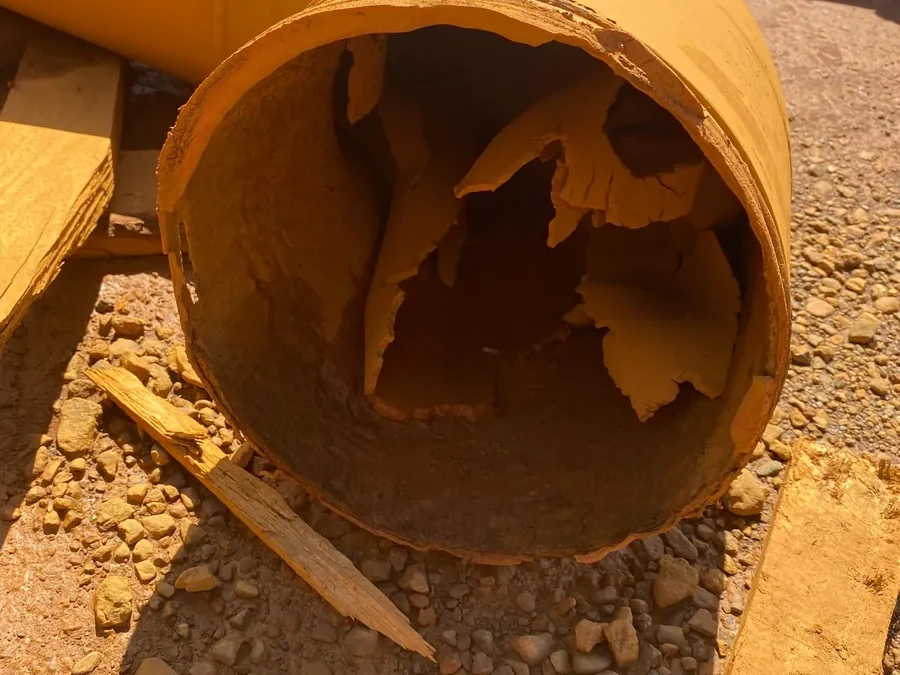
There's a line item that rarely makes it onto the project schedule: slurry characterisation testing. The liner spec gets locked, pipe gets manufactured, and the first indication something is wrong comes from an inspection report six months after commissioning.
The data was available. It just wasn't gathered.
ASTM G75 slurry abrasion testing quantifies exactly how aggressive a slurry is before the material spec is written. Understanding what the tests measure, and where they don't tell the full story, is the difference between a liner selected with confidence and one revised after the first shutdown.
Why Slurry Wear Is Different from Dry Abrasion
Wear in slurry pipelines and hoses is not a single mechanism. It's typically a combination of three.
Erosion: solid particles carried by the fluid impact the pipe or liner surface, chipping away material at the point of contact. Higher velocity and angular particles accelerate erosion significantly.
Abrasion: particles in contact with the surface slide against it under pressure. This is the dominant mechanism at lower velocities and in settling slurry where a particle bed forms at the base of the pipe.
Corrosion-erosion: chemical attack from the carrier fluid (acidic tailings, flotation or leaching reagents) weakens the surface layer, which is then removed more readily by mechanical wear. The two mechanisms compound each other. Wear rates in corrosive-abrasive environments can be several times higher than either mechanism alone.
The relative contribution of each mechanism depends on slurry velocity, particle size and shape, solids concentration, and fluid chemistry. CSIRO research engineer Dr Lachlan Graham notes that viscosity is a significant but often overlooked variable: higher viscosity carrier fluids cushion particle impacts, reducing erosive wear; lower viscosity slurries such as dilute iron ore tailings must be pumped at higher velocity to prevent settling, which increases erosive wear on pipe walls. The same slurry at two different velocities can produce vastly different wear rates and wear profiles.
None of this is captured by a dry abrasion test alone. Understanding slurry wear requires tests that account for the carrier fluid, the particle suspension behaviour, and the interaction between chemical and mechanical attack.
How Slurry Wear Is Tested
These tests are run by independent, specialist laboratories rather than by Beaver. BPE's role is to interpret the results — reviewing the data, weighing it against field experience, and translating it into a liner and hose specification you can rely on.
ASTM G75: Miller Number and SAR Number
ASTM G75 is the most widely used standardised method for slurry abrasion testing. It produces two outputs.
The Miller Number quantifies the abrasivity of the slurry itself. A metal specimen is reciprocated through the test slurry for a defined period, and mass loss is measured. The result is expressed in standard abrasion units (SAU). A higher Miller Number means a more abrasive slurry.
The SAR Number (Slurry Abrasion Response) measures the wear resistance of a specific liner material under those slurry conditions. Testing two different liner materials in the same slurry gives a direct, quantified comparison of how each will perform in service.
The Miller Number tells you how aggressive the slurry is. The SAR Number tells you which material holds up better against it. Together, they provide the foundation for a data-driven liner selection decision.
General Miller Number ranges and their implications for liner selection:
| Miller Number | Slurry classification | Typical liner approach |
|---|---|---|
| 0-50 | Low abrasivity | HDPE or standard rubber |
| 50-100 | Moderate abrasivity | Rubber or polyurethane |
| 100-200 | High abrasivity | Premium polyurethane or ceramic |
| 200+ | Severe abrasivity | Ceramic or hard alloy steel |
These are starting points, not rules. The right liner depends on the full characterisation of the slurry, not just a single number.
ASTM G65: Dry Sand/Rubber Wheel Abrasion Test
ASTM G65 measures the abrasion resistance of solid materials (metals, rubber compounds, engineered polymers, ceramics) under dry sliding conditions. A test specimen is pressed against a rotating rubber wheel while a controlled stream of dry sand flows between them.
Volume loss is measured and used to calculate a relative wear resistance index.
It's widely used to rank and compare candidate materials for abrasion resistance. The limitation for slurry applications is the dry test condition: ASTM G65 does not account for the combined corrosion-erosion mechanisms present in wet slurry service. Results should inform material shortlisting, not serve as the sole basis for final material selection in a wet, chemically active application.
Pipe Loop Testing
Pipe loop testing, also called slurry circulation testing, is the most realistic method available. Actual slurry is pumped around a closed-circuit loop at controlled velocity, and lined pipe spool sections or hose segments are monitored for wear over time. The outputs include measured wear rates for each material under test, wear profile distribution (uniform vs localised), and velocity sensitivity.
Because the test uses actual slurry at representative velocities, it captures the combined effect of all three wear mechanisms simultaneously. The drawback is resource intensity: loop tests require slurry samples from the mine or plant, take time to run to meaningful wear levels, and require specialist facilities. They are most appropriate for major pipeline projects where the capital cost justifies the investment, or when evaluating novel liner materials with limited field history.
What Test Data Tells You, and What It Doesn't
Laboratory wear test results give you a comparative ranking of materials and a characterisation of slurry abrasivity. They don't directly predict field service life, for several reasons.
Velocity scaling: test velocities in ASTM G75 and G65 are fixed. Field operating velocities can differ significantly. Wear rate does not scale linearly with velocity. Small increases produce disproportionate increases in wear in erosion-dominated applications.
Particle size distribution: laboratory tests often use controlled, prepared particle fractions. Real slurries have a particle size distribution that shifts with ore hardness, grinding circuit performance, and operational variation. A coarser distribution in the field than assumed in the test produces higher wear rates than the test predicts.
Combined mechanism effects: corrosion and erosion acting together produce greater wear than the sum of each mechanism independently. Standard abrasion tests don't always replicate this compounding.
Slurry wear prediction from test data therefore requires applying scale factors for velocity, particle size, and combined mechanisms, plus appropriate safety margins. The magnitude of those factors depends on confidence in the test data and the consequence of under-specifying.
The practical implication: test data is most valuable as a comparative and shortlisting tool. It tells you which liner will outperform which, and by roughly how much, in a given slurry. It doesn't replace engineering judgement about field conditions, operating margins, and the velocity profile of your specific pipeline.
Applying Test Data to Specification
A sound specification starts with characterising the slurry. The key parameters are:
• Particle size distribution (d50, d80, d100): drives the balance between erosion-dominated and abrasion-dominated wear mechanisms
• Particle hardness: quartz (Mohs 7) is highly abrasive; softer gangue minerals cause less liner wear at the same concentration
• Solids concentration: higher concentration means more particle contacts per unit time and higher wear rates at the same velocity
• Operating velocity range: the most sensitive variable; wear rate typically scales as velocity to the power of 2 to 3, depending on the dominant mechanism
• pH and chemical composition: determines whether corrosion-erosion compounding needs to be factored in
• Temperature: affects rubber and polymer liner performance significantly at elevated values
With these parameters defined, an ASTM G75 Miller Number test gives you the abrasivity characterisation of the slurry, and SAR testing of candidate materials gives you the comparative wear ranking. Combined with field experience from similar applications, this data is the basis for a defensible liner selection.
For slurry hose specification, the same logic applies. Rubber compound selection, wall construction, and liner thickness all need to match the characterised media. A specification that works well in a dilute iron ore tailings line may fail quickly in a high-density copper concentrate circuit at a similar operating velocity, not because the hose is inferior, but because the specification wasn't built around the actual conditions.
Velocity is the most sensitive variable in this calculation. Small increases above 3-4 m/s produce disproportionate increases in wear rate.
Closing the Loop: Field Wear Monitoring
Laboratory slurry abrasion testing predicts performance. Field wear monitoring confirms it.
The Slurryflex Wear Monitor is a wire conductor embedded in the hose liner at a defined depth, typically 75% of total liner thickness from the bore surface. When the liner wears to that depth, the conductor circuit breaks, and the push-button or multimeter indicator signals that the hose is approaching end of life.
Maintenance teams replace hoses at the next planned shutdown rather than responding to an unplanned failure. The wear rate data the monitor records at that location, in that application, also feeds back into the specification process. If field wear is significantly faster than the test data predicted, the material selection or assumed operating conditions need review. If wear is slower, service intervals can often be extended.
Test data informs the original specification. Field wear monitoring validates it. Field data refines future specifications. That sequence is how slurry wear testing translates to real-world pipeline performance.
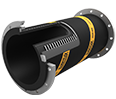
At KCGM's Fimiston gold mine in WA, cyclone feed elbows in the milling area were failing every three to six months. Tight piping geometry was concentrating particle impact on the outer radius of each bend, and the rubber-lined steel spools had no way to signal when they were approaching failure. They only showed a problem when they leaked. BPE re-engineered the piping with sweeping bends to redistribute slurry flow, replaced the rubber-lined spools with Slurryflex CLX ceramic-lined hose, and installed predictive wear monitors in each hose.
Two years on, the hoses have lasted more than five times longer than the original spools, with no leaks and no unplanned shutdowns between planned maintenance windows. The maintenance team checks wear status by pressing a button on the indicator box: no manual inspection, no guesswork about when to replace.
BPE's Approach to Slurry Wear Testing and Specification
Beaver Process Equipment works with clients at both ends of the specification process: design and operations.
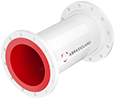
For new projects, BPE's team works through the slurry characterisation data with project engineers. The ASTM G75 and G65 testing itself is carried out by independent specialist laboratories; BPE reviews and interprets the results — Miller Number and SAR data, and the material wear rankings that come out of them — and recommends liner and hose selections matched to actual media conditions. Where the application calls for severe-duty polyurethane-lined pipe, Abrasiguard slurry piping is matched to liner thickness based on characterised conditions, not a one-size spec. This work is covered under BPE's slurry piping specification reviews.
For operating plants where the same sections of pipeline or hose keep failing ahead of planned shutdowns, a slurry piping audit provides a structured, on-site investigation. BPE's specialists walk the plant with the maintenance team, identify the root cause of failure (often a mismatch between the specified material and the actual wear mechanism), and produce a practical report with recommendations grounded in both test data and field experience across WA iron ore, gold, lithium, and copper operations.
BPE's technical team also draws on CSIRO's mineral resources research into slurry rheology and transport behaviour, which informs how slurry properties translate to wear outcomes in operating pipelines.
The goal in both cases is the same: a specification you can defend with data, not one you revise after the first shutdown.
Frequently asked questions
What is the Miller Number and why does it matter for pipeline design?
What is the difference between ASTM G75 and ASTM G65?
ASTM G75 tests slurry abrasivity in wet conditions: a metal specimen is worn by the actual slurry being tested, producing the Miller Number (slurry abrasivity) and SAR Number (material wear response). ASTM G65 tests dry abrasion resistance by pressing a material specimen against a rubber wheel with dry sand. G65 is widely used to rank solid liner materials, but its dry test condition doesn't capture the combined corrosion-erosion mechanisms in real slurry service. Both tests are useful inputs; neither alone tells the full story.
Can you predict actual service life from slurry wear test data?
Laboratory slurry wear test data gives you a comparative material ranking and a characterisation of slurry abrasivity. Translating that into a specific field service life requires applying scale factors for velocity, particle size distribution, and combined wear mechanisms, plus appropriate safety margins. The result is an informed estimate, not a guaranteed figure. The Slurryflex Wear Monitor embedded in slurry hose is the most reliable field check on whether a specification is performing as predicted in service.
What slurry parameters are needed before testing?
The key inputs are: particle size distribution (d50, d80, d100), particle hardness, solids concentration by weight or volume, operating velocity range, slurry pH, process fluid temperature, and any chemical reagents in the carrier fluid. Without these, test results can't be reliably interpreted or scaled to field conditions. Samples should be collected from the actual process circuit rather than relying on nominal mineral specifications: real slurries vary significantly from textbook assumptions.
When is pipe loop testing worth commissioning?
Pipe loop testing runs actual slurry through candidate liner spool sections in a closed circuit. It's the most realistic but also the most resource-intensive method. It's worth commissioning when the capital cost of a new pipeline is high enough that material selection uncertainty creates meaningful financial risk, or when evaluating a liner material with limited field history in your specific slurry type. For plant upgrades and hose replacement decisions, Miller Number data combined with field experience from similar applications is usually sufficient.
What does the Slurryflex Wear Monitor measure?
The Slurryflex Wear Monitor is a wire conductor embedded in the hose liner at a fixed depth, typically 75% of total liner thickness from the bore surface. When the liner wears to that depth, the conductor circuit breaks and the push-button or multimeter indicator signals that replacement is approaching. It converts reactive hose replacement to planned replacement, and the wear rate data it generates over time can be used to validate and refine the original specification. Available in all Slurryflex mining hose and CLX ceramic-lined hose from DN50 to DN1500.
Does Beaver Process Equipment carry out the slurry wear testing?
No. The ASTM G75, ASTM G65 and pipe loop tests described above are carried out by independent, specialist laboratories. Beaver's role is to review and interpret that test data and apply it to your liner and hose selection, combining the lab results with field experience across WA iron ore, gold, lithium, and copper operations. If you already hold wear test data for your slurry, our technical team can help you turn it into a defensible material specification.
Talk to BPE's Specification Team
If you're working with slurry wear test data and need help applying it to a liner or hose selection, or if you need a slurry wear prediction for an existing circuit that's wearing faster than its spec predicted, talk to our technical team for an application review.
Explore related content

Pinch Valves for Abrasive Slurry: How They Work and When to Use Them
How pinch valves work in abrasive slurry, when to specify one, and how Defender pinch valves deliver longer service life.

Mining Hose for Slurry Applications: The Complete Selection Guide
A complete selection guide to mining hose for slurry service: types, applications, failure modes, and lifecycle planning.

Rubber Lined Pipe vs Polyurethane, Ceramic and UHMWPE: A Slurry Liner Comparison Guide
Side-by-side comparison of rubber, polyurethane, ceramic and UHMWPE liners for slurry service, with selection guidance.
We're here to help
Got questions? Need advice? Tap into our experience and get specialist advice from our friendly team.


Slurry piping audits
Solve slurry piping maintenance problems for good. No more leaking pipes, no more unplanned shutdowns.