




How we can help you with your next slurry pipeline
Design with certainty
We get how complex it is to design a slurry pipeline. You can reduce risk and uncertainty by dealing with a supplier who knows what it takes to deliver large pipeline projects.
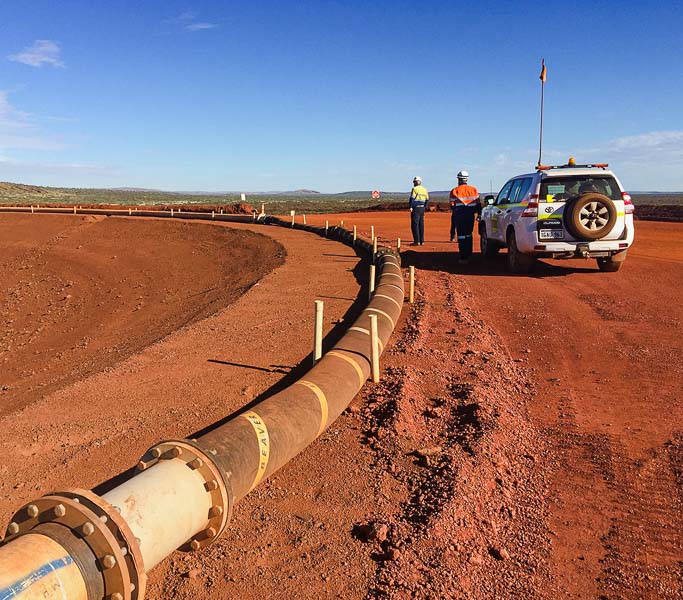
Tap into our long-distance experience in slurry piping and pipeline transport. That covers tailings lines, paste backfill and concentrate pipelines. We're here to help you make good decisions and design with confidence.
Unbeatable wear performance
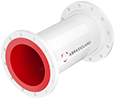
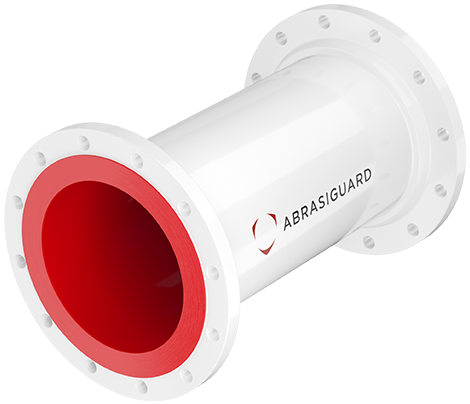
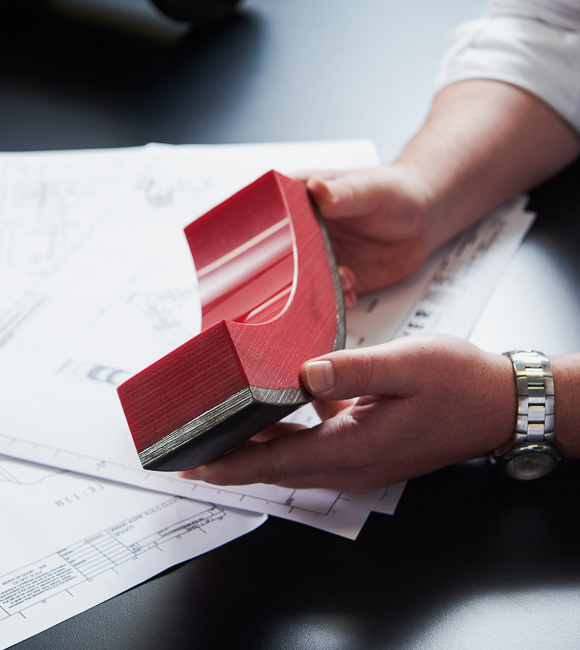
Our Abrasiguard polyurethane lined slurry piping comes from years of wear testing and field validation. At Roy Hill's desands circuit, that's a documented 10× longer wear life. It's also around $200,000 in maintenance savings.
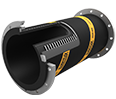
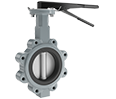
Slurryflex mining hose gives you premium flexibility and durability for pipeline sections with changes in elevation or direction. We'll also help you select the right slurry valves for the complete package.
Get real slurry wear data you can rely on
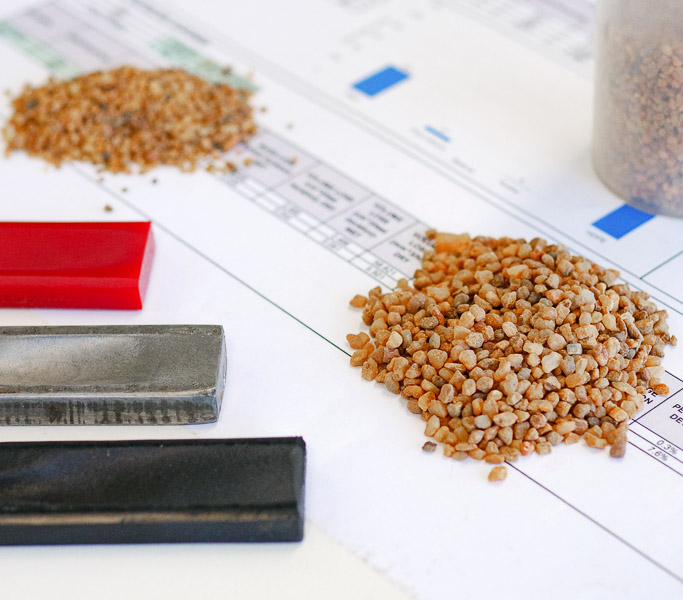
You don't have to design in the dark. We can take your slurry and pipe material options and run them through our coriolis tester.
This gives you accurate, empirical data on comparative wear rates. No more guesswork and estimates, just smarter, better informed decisions. So your design works perfectly, as it should.

Talk to a slurry pipeline expert
Tap into our experience manufacturing and delivering large pipelines. We're here to make your job easier so you can design with confidence.
Any size. Any scale.
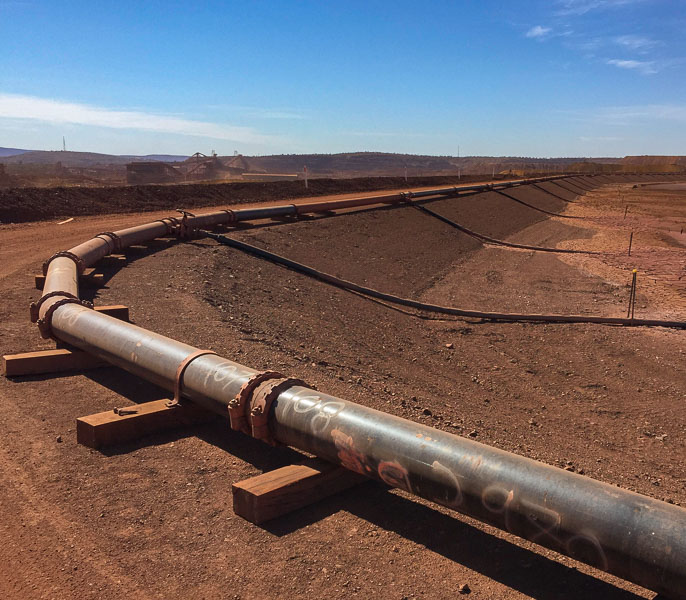
Whether your pipeline is just 1 km long or you need more than 200 km of piping, we can supply projects of any size. With the largest lined piping facility in Australia, we can manufacture at the volume needed for the largest projects.
We manufacture pipes with Abrasiguard lining from DN80 to DN1350, up to 18 metres long.

Pipe, Hose and Valves: The Full Package
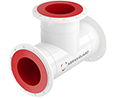
A complete slurry pipeline system needs three components working together: abrasion-resistant lined pipe spools for fixed runs, flexible mining hose for bends and pump connections, and correctly specified valves for isolation and control.
Getting all three right in the design stage is the difference between a slurry pipeline that runs reliably to its next planned shutdown and one that fails in between.
Slurryflex mining hose is purpose-built for the high-wear flexible sections of a slurry pipeline. At FMG Solomon, switching to Slurryflex delivered 8 times longer hose life compared to standard rubber-lined pipe. For isolation duty, knife gate valves are suited to tailings, cyclone feed and mill discharge lines. In lithium and gold circuits, pinch valves perform better where abrasive or corrosive slurries wear through metal-seated designs quickly.
Whether the application is a tailings dam discharge line, a concentrate pipeline or a cyclone feed circuit, we supply pipe spools, hose and valves as a complete package from a single Perth manufacturer. One specification, one supplier, one delivery.

Slurry Pipeline Services
BPE offers slurry pipeline services across the full asset life cycle, from specification review and design support through to on-site condition audits and complete system replacement.
If you are working on a new project, a slurry piping specification review reduces design risk before anything is ordered. If you are managing an operating site, a slurry piping audit identifies wear and mis-specification early, before failures force an unplanned shutdown. And if a pipeline has reached the end of its useful life, SlurryIQ delivers a complete engineered replacement covering 3D scan, redesign, manufacture and install, with documented wear life improvement.
Services include: slurry piping audits, slurry piping specification reviews, cyclone feed lines, pump spools (suction and discharge), thickener lines, mill feed lines, and SlurryIQ.
Frequently Asked Questions
How Do You Select Between Lined Pipe Vs Flexible Hose In A Slurry Pipeline System?
What Are Common Failure Modes In Slurry Pipelines And How Does Specification Prevent Them?
Common failures include liner wear-through, corrosion, joint leaks and blockages from poor velocity control. Correct specification is critical for reducing expensive extended shutdowns when maintenance is required. As an example, the Concentrate Piping we supplied to the MMG Dugald River zinc mine project became an essential upgrade needed urgently before a planned shutdown, as the site’s corrosive slurry corroded the interior of the original system.
What Are The Key Design Decisions When Building A Slurry Pipeline?
The key decisions in slurry pipeline design are choosing the right liner material, sizing the diameter for proper velocity, using practical spool lengths, and planning bends that minimise turbulence and wear. These fundamentals are shown clearly in projects like Rio Tinto’s 13 km slurry pipeline build where correct specification delivered major lifecycle gains.
How Does Hose Or Pipe Flexibility Impact Installation And Maintenance On Over-Land Or Underground Lines?
Flexible sections make slurry pipeline installation faster, absorb movement, reduce stress on joints, and lower long-term maintenance. We’ve covered this in depth in our mining hose bends in the Learning Hub.
How Does Spool Length And Number Of Joins Affect Cost, Installation Time And Reliability?
Longer spools reduce joins, installation hours and coupling costs, which lowers lifetime risk for your slurry pipeline. We’ve detailed this strategy in our spool-length case study.
What Role Do Audits And Specification Reviews Play In Pipeline Lifecycle Performance?
Slurry pipeline audits and specification reviews check that the installed system still matches the actual slurry, operating pressures, and throughput. Regular reviews pick up emerging wear, mis-specification, or design issues early, so you can adjust materials or layout and keep the slurry pipeline performing at its best over the long term.
Time for a review of your pipeline? Avoid your next unplanned shutdown and talk to us about a Slurry Piping Audit.
What Is Slurry Pipeline Optimisation?
Slurry pipeline optimisation is the process of improving pipeline performance by matching liner materials, pipe bore, flow velocity, and layout to actual slurry conditions rather than generic specifications. It reduces wear rates, energy consumption, and unplanned maintenance. For operating sites, we typically start slurry piping optimisation with a condition audit. At Roy Hill, an audit-led upgrade to Abrasiguard lined pipe gave them 10× longer wear life in the desands circuit. That’s around $200,000 in maintenance savings.
What Is a Mining Pipeline System?
A mining pipeline system is the network of pipes, valves, hose assemblies, and fittings that transports ore slurry, tailings, or concentrate between processing stages on a mine site. Unlike clear-water pipelines, mining systems require abrasion-resistant liners, controlled velocity to prevent settling, and regular condition monitoring to manage accelerated wear.
What is a concentrate pipeline?
A concentrate pipeline transports mineral-rich slurry from a processing plant to a storage or export facility, typically in copper, iron ore and lithium operations. Correctly specified wear-resistant lined pipe and valves are critical to maintaining throughput between shutdowns. For design guidance, see our slurry pipeline design guide and guide to slurry wear types in the Learning Hub.
You might also be interested in
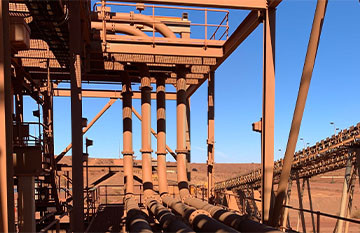
Hope Downs 4 Iron Ore Mine – High Pressure Tailings Hoses
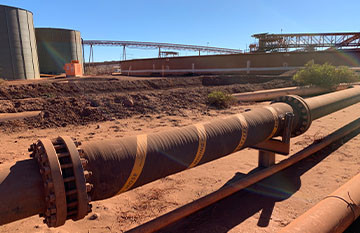
Paraburdoo Iron Ore Mine – Mining Hose Package for Tailings Pipeline
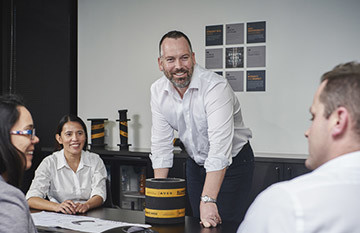
Slurry Piping Specification Reviews
Create a robust piping specification. Design with total confidence.
We're here to help
Got questions? Need advice? Tap into our experience and get specialist advice from our friendly team.


Slurry piping audits
Solve slurry piping maintenance problems for good. No more leaking pipes, no more unplanned shutdowns.