



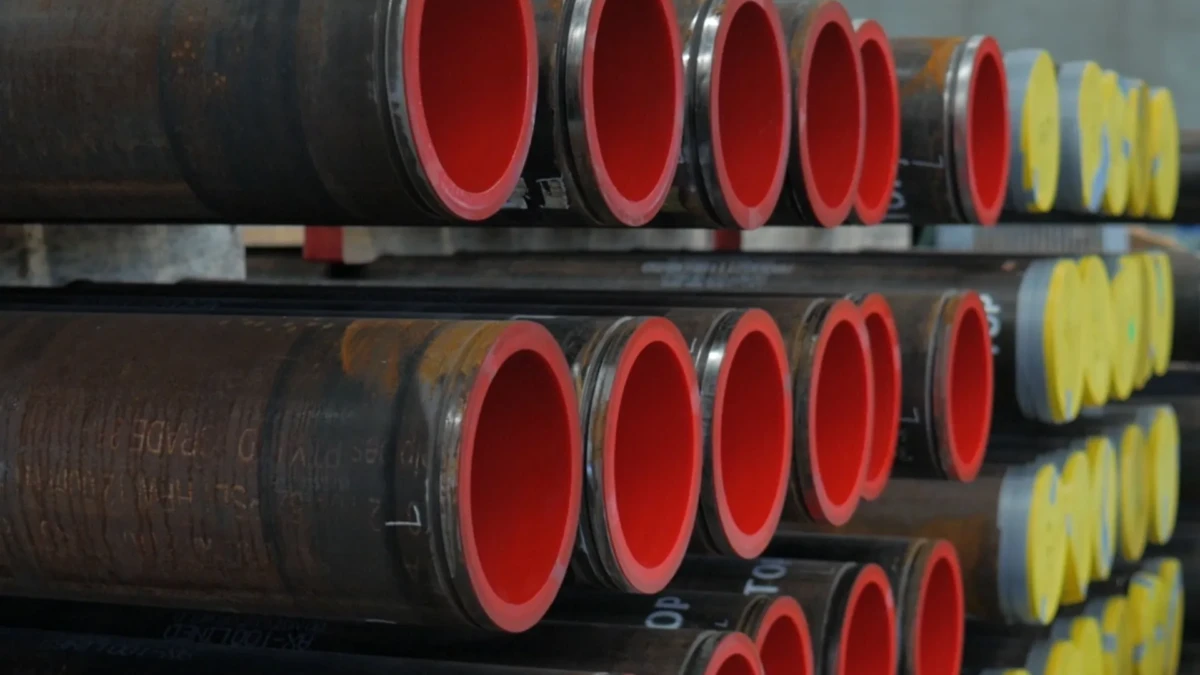
Getting slurry liner selection wrong is costly in ways that don't appear until months after commissioning. A rubber lined pipe that lasts six months instead of two years. A ceramic-lined steel spool shedding tiles into your cyclones. A UHMWPE liner wearing through in a corrosive tailings line, leaving bare steel to corrode from the inside out.
This guide covers the four main slurry lining materials used in Australian mining: rubber, polyurethane, ceramic, and UHMWPE. What each one is genuinely good at, where each one fails, and the selection criteria that matter most when you're drawing up a slurry material specification for a new project or troubleshooting an installation that isn't performing.
What Drives Slurry Liner Selection
No single liner material wins across all conditions. The right choice depends on several variables at once.
Slurry abrasivity: Characterised by Miller Number (ASTM G75). Higher abrasivity pushes you toward polyurethane and ceramic.
Particle size, shape, and hardness: Coarse, angular, hard particles hit much harder than fine, soft tailings. Iron ore concentrate, coarse classifier discharge, and gold leach residue (with high silica content) are in a different category to fine copper tailings or mill discharge from softer ores. Rubber and UHMWPE both struggle as particle size, angularity, and hardness increase.
Slurry velocity: High velocity amplifies erosive wear fast. Above 3–4 m/s, material selection becomes critical. What survives comfortably at 2 m/s can fail rapidly at 4 m/s.
Chemical environment: Acidic or alkaline slurries affect how polymers and ceramic bonding systems hold up over time. Leach circuits, flotation reagents, cyanide in gold tailings: all worth factoring in early.
Application geometry: Straight runs, bends, reducers, pump suctions, cyclone feeds, and mill discharge lines see different wear profiles. What works for a straight spool isn't always right for a high-impact bend.
Spool length: Longer spool lengths mean fewer joints, lower installation cost, and less maintenance over the pipeline's life. Most engineers underestimate how much this one factor affects total cost of ownership.
Rubber Lined Pipe
What It Is and Where It Works
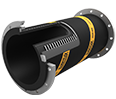
Rubber lined steel pipe uses a vulcanised natural or synthetic rubber liner bonded inside a steel spool. The rubber absorbs particle impact by deforming slightly on contact, then rebounding. Rather than being gouged, it returns energy to the passing particle. That elastic response is what makes rubber effective in moderate abrasion applications where particle impact, not sliding abrasion, dominates.
It's a practical choice for pump suctions and discharge connections, short process plant runs handling moderate slurries, and applications where the rubber liner's impact absorption is valuable, cushioning particle strikes that would chip a brittle ceramic tile lining. Corrosion protection is solid where abrasivity is moderate and chemical compatibility isn't a concern.
Where Rubber Lined Pipe Falls Short
In coarse, high-velocity slurry (iron ore concentrate, coarse classifier discharge, anything above roughly 200–300 microns at elevated velocity) rubber wears through quickly. That elastic energy return that protects it at lower abrasivity fades fast as particle size and impact energy climb.
Spool length restriction: Piping standards limit rubber-lined steel to 6-metre spools. Polyurethane-lined pipe comes in 18-metre lengths. That's three times as many spools, joints, couplings, and installation cost for the same pipeline run. On a long-distance pipeline, the maths become hard to ignore.
Surface roughness: Rubber is rougher than polyurethane or UHMWPE. More head loss, which either forces pumps harder (and wears them faster) or requires extra pump stations along the route.
Corrosive slurry: Rubber performs best in abrasion-dominated service. In highly acidic or chemically aggressive carrier fluids, check compound compatibility for your specific conditions before specifying.
At FMG's Solomon mine, rubber-lined steel spools in the up-current classifiers were lasting six months before wear-through. The iron ore concentrate was simply too aggressive at those velocities. Switching to Abrasiguard polyurethane-lined pipe delivered an 8× improvement in wear life and got rid of the 6-metre spool headache in a demanding circuit.
Polyurethane Lined Pipe
What It Is and Where It Works
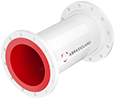
Beaver's Abrasiguard polyurethane lined pipe uses a cast polyurethane liner (typically 6–20mm thick depending on application severity) bonded to the steel substrate. BPE's AX-100 polymer formulation is engineered specifically for slurry wear: harder than general-purpose compounds, more resilient, and with broader chemical resistance. It keeps rubber's energy-absorbing characteristics while significantly outperforming it on abrasion. The smoother bore also reduces head loss relative to rubber.
For severe slurry service in Australian mining, polyurethane covers the most ground:
• Long-distance tailings pipelines, where 18-metre spool lengths deliver real installation savings
• Mill discharge and concentrate transfer lines
• Cyclone feed systems handling abrasive ore types
• Applications with chemically active carriers: cyanide, copper sulfate, flotation reagents
• Anywhere a pipeline needs to last the life of mine without a mid-project replacement campaign
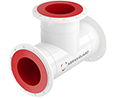
Abrasiguard comes in six configurations in DN50–1350: straight spools (AA-Series), bends (AC-Series), reducers (AD-Series), Y-pieces (AE-Series), custom spools (AG-Series), and tees. Most mine site geometries are covered.
At Centamin's Sukari gold mine in Egypt, HDPE tailings lines were blowing out at elbows and weld joints. The team was looking at ceramic-lined pipe in 1.5-metre lengths, which would have meant 80 spools for 70 metres of pipework. Abrasiguard's 18-metre capability cut that to 18 spools, with 20mm high-performance polymer liner handling cyanide, copper sulfate, and other reagents in the gold slurry indefinitely.
For a 5km, DN400 gold plant tailings pipeline over a 30-year mine life, BPE's cost modelling puts polyurethane-lined steel at a 69% total cost of ownership saving against unlined steel. That's 30+ year wear life versus 5 years for unlined steel, lower spool count, and installation savings from longer lengths.
Where Polyurethane Falls Short
Standard polyurethane compounds are stable in dry heat to approximately 40°C, with high-performance formulations working to around 80°C. Flash tanks, pressure oxidation circuits, high-temperature leach lines: in those environments, temperature has to be part of the specification conversation. Formulation and application quality also vary between suppliers, so not all polyurethane-lined pipe performs the same way.
Ceramic Lined Pipe and Hose
The Right and Wrong Way to Use Ceramic
Ceramic lining uses alumina tiles (typically 92–95% Al₂O₃) for a hard, abrasion-resistant surface. It has excellent resistance to sliding abrasion, where particles drag across the liner. Under impact conditions, it behaves very differently.
Two approaches exist: tiles bonded into steel pipe, and tiles embedded in a rubber hose. The rubber vs ceramic liner comparison changes completely depending on which one you're looking at. The results are worlds apart.
Ceramic Lined Steel Pipe — and Why It Keeps Failing
When rubber-lined steel isn't lasting in high-wear zones, ceramic-lined steel is often the next thing maintenance teams try. Makes sense on paper — ceramic tiles do give better sliding abrasion resistance than rubber. But in practice, ceramic lined steel pipe rarely delivers the improvement teams are hoping for.
The problem is rigidity. Rigid steel outer plus rigid ceramic inner: a system with no capacity to absorb impact or vibration. When slurry hits a bend or turbulent zone, the shock goes straight to the ceramic-adhesive interface. Tiles debond. Once one goes, slurry gets under the adjoining grout and progressively strips whole sections of the spool. The tiles still have wear life in them. Doesn't matter — once the assembly starts failing, it's done. Dislodged ceramic pieces then flow downstream into cyclones and pumps.
Manufacturing adds another risk. Ceramic-lined steel spools are built tile by tile, creating grout seams that give slurry entry points. Bonding quality varies with the manual process.
Ceramic in Rubber Hose — What Actually Works
The answer is Beaver's Slurryflex CLX range: hexagonal fine-grain alumina tiles embedded into the rubber liner of a mining hose by hot vulcanisation. No grout seams. No exposed adhesive bonds. The rubber substrate absorbs the impact and vibration that ceramic-in-steel can't handle.
CLX is built for the highest-wear zones in a processing plant:
• Mill discharge connections
• Cyclone feed, overflow, and underflow lines
• High-impact bends with rapid direction change
• Pump suction and discharge connections where turbulence is highest
• Gravity circuits handling coarse, angular particles
The rubber hose carcass handles installation realities that steel pipe can't: flexibility for misalignment, easier handling in tight spaces, no hot work needed.
At FMG Solomon, the cyclone overflow pipework was a chronic maintenance problem. Switching to Slurryflex CLX ceramic hose delivered 8× longer service life. The ceramic tile handles the sliding abrasion; the rubber carcass handles the impact that would strip tiles from steel pipe.
UHMWPE Lined Pipe
What It Is and Where It Works
UHMWPE (Ultra-High-Molecular-Weight Polyethylene) is a pull-through thermoplastic liner installed the same way as HDPE. As a UHMWPE slurry liner, it offers low friction, strong chemical resistance, and moderate abrasion resistance.
Worth considering for long-distance pipelines where the slurry is chemically aggressive but not heavily abrasive. UHMWPE resists most acids, alkalis, and solvents across a broader range than rubber, and its low friction coefficient suits fine-particle tailings pipelines where pumping efficiency matters. For applications where HDPE wears through too fast but conditions don't justify the cost of polyurethane, it sits in a useful middle ground.
Where UHMWPE Falls Short
As a pull-through liner, UHMWPE carries the same risks as HDPE. Under vacuum conditions, sections can debond from the steel substrate and collapse into the bore. The leak can also be far from the visible damage point, which makes inspection of long runs non-trivial.
For highly abrasive slurry, coarse particle applications, or high-velocity systems, UHMWPE wears significantly faster than polyurethane. It's not suited to iron ore concentrate, coarse cyclone feed, or other severe slurry service where particle impact dominates. It also doesn't form complex geometries readily — bends and custom spools aren't an option.
Head-to-Head Comparison
| Property | Rubber lined pipe | Polyurethane lined pipe | Ceramic hose (CLX) | UHMWPE lined pipe |
|---|---|---|---|---|
| Abrasion resistance | Moderate | High | Very high (sliding) | Moderate |
| Impact absorption | Very good | Good | Excellent (in hose) | Moderate |
| Chemical resistance | Moderate | High | High (tile) | Very high |
| Surface roughness | Higher | Low | Very low | Very low |
| Max spool/hose length | 6m | Up to 18m | Standard hose lengths | Long (pull-through) |
| Geometry flexibility | Good | Excellent | Good | Limited |
| Temperature limit | Up to ~70°C | Up to ~80°C (standard) | High | Up to ~80°C |
| Particle size sensitivity | Moderate–high | Low | Low | Moderate |
| Best application | Short plant runs, pump connections | Tailings lines, long pipelines, concentrate transfer | High-impact bends, mill discharge, cyclone feed | Long pipelines, moderate abrasion, chemical resistance priority |
Matching Liner to Application
Long-distance tailings or concentrate pipelines: Polyurethane. Longer spool lengths cut installation cost, fewer joints means fewer leak points, and 30+ year wear life removes the mid-project replacement campaign from your schedule.
Mill discharge, cyclone feed, high-impact bends: This is where Slurryflex CLX ceramic hose earns its place. The rubber-substrate ceramic combination handles impact and turbulence that defeats ceramic-in-steel and chews through rubber or polyurethane spools prematurely.
Short process plant runs, pump connections: Rubber is viable and cost-effective for moderate abrasion. Step up to polyurethane for iron ore concentrate, coarse gold ore, or anything with a high Miller Number.
Long pipelines, fine-particle, chemically aggressive slurry, moderate abrasivity: A UHMWPE slurry liner is worth evaluating. The chemical resistance and low friction suit certain tailings and leach circuit applications where slurry conditions sit within its capability.
High-temperature environments: Check polymer specs carefully. Rubber, polyurethane, and UHMWPE all have temperature limits. Ceramic doesn't, but the substrate and bonding system still need consideration.
Why the Total Cost of Ownership Calculation Changes Everything
The purchase price of rubber lined pipe is lower than polyurethane. On a long-distance pipeline, that gap closes quickly once you factor in spool count (6m vs 18m), additional couplings, installation labour, crane time, and earlier replacement cycles.
BPE modelled a 30-year, 5km, DN400 gold tailings pipeline (see the full cost comparison):
• Unlined steel: baseline
• HDPE-lined steel: 33% more expensive over life of mine
• Rubber-lined steel: 21% more expensive over life of mine
• Polyurethane-lined steel: 69% cheaper than unlined steel over life of mine
Wear life is only part of it. The spool length advantage, the installation cost reduction, and avoiding replacement campaigns at year 10, 15, and 20 of a 30-year project are what drive that number.
Getting slurry liner selection right at the design stage is the cheapest fix available. Getting it wrong compounds for the life of the asset.
How Beaver Process Equipment Approaches Liner Selection
Beaver's piping specialists start with a site walkthrough and slurry characterisation, not a product catalogue. If rubber lined pipe is the right answer for a particular application, that's what gets recommended.
With 35+ years of experience across WA iron ore, gold, lithium, copper, and mineral sands operations, and the world's largest polyurethane-lined pipe manufacturing facility, Beaver has the field data to back recommendations with actual project outcomes, not brochure claims.
The Abrasiguard range covers DN50–1350 in six configurations and up to 18-metre spool lengths. The Slurryflex CLX ceramic hose range (five configurations, from hard-wall to self-floating) is built for the high-impact, high-turbulence zones where rigid-liner pipe consistently falls short.
If you're specifying liner material for a new project or reviewing an installation that isn't hitting expected wear life, get in touch with our technical team for an application review.
Frequently asked questions
Is rubber lined pipe suitable for mining slurry pipelines?
What is the main difference between rubber and polyurethane lined pipe?
Polyurethane has significantly better abrasion resistance, lower surface roughness (less head loss, less pump wear), broader chemical resistance, and it's available in 18-metre spool lengths. At FMG Solomon mine, polyurethane outlasted rubber by 8× in iron ore concentrate service. The higher upfront cost gets recovered through fewer replacement cycles and lower installation cost over the asset life.
Why does ceramic lined steel pipe fail in slurry service?
Rigidity. Steel pipe plus ceramic tiles equals no capacity to absorb impact or vibration. When slurry hits a bend or turbulent zone, shock concentrates at the tile-adhesive bond. Once a tile debonds, slurry works under the surrounding grout and progressively strips whole sections. Dislodged tiles then cause downstream damage to cyclones and pumps. The fix is ceramic tiles embedded in a rubber hose carcass: the rubber takes the impact, the ceramic handles the abrasion. In any rubber vs ceramic liner evaluation, that's the configuration that actually works.
What is UHMWPE lined pipe used for in mining?
Long-distance pipelines where abrasivity is mild to moderate and chemical resistance matters. It resists most acids, alkalis, and solvents, and its low friction makes it suitable for fine-particle tailings pipelines with chemically aggressive carriers. It's not suited to high-velocity coarse-particle slurry, complex spool geometries, or applications that need polyurethane-level abrasion resistance.
How do I choose the right slurry liner material for my application?
Three things to nail down in any slurry material specification: slurry abrasivity (Miller Number or wear rate data from a similar service), operating velocity, and application geometry. High abrasivity plus high velocity points to polyurethane or ceramic. Moderate abrasivity with aggressive chemistry points to polyurethane or UHMWPE. High-impact turbulent zones point to Slurryflex CLX. If you're not sure, Beaver's technical team can review your conditions and recommend the right spec.
Explore related content

Slurry Pipeline Design: How Slurry Characteristics Drive Liner Selection
How particle size, velocity and solids concentration drive liner selection in slurry pipeline design.

4 Slurry Pump Piping Issues and How to Avoid Them
Improving reliability in your pump piping doesn’t have to be complicated. If you follow these simple steps, you won’t have to worry about your pump piping reliability again.

4 Steps to Build a Business Case to Fix Your Slurry Piping
We know that as a reliability engineer, you want to make an impact by finding smart upgrades that improve your plant. Follow these four steps, and you’ll build a persuasive business case that management can’t say no to.
We're here to help
Got questions? Need advice? Tap into our experience and get specialist advice from our friendly team.


Slurry piping audits
Solve slurry piping maintenance problems for good. No more leaking pipes, no more unplanned shutdowns.