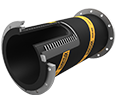
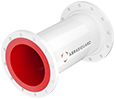
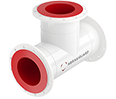
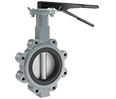





Rubber Expansion Joints & Bellows for Mining Pipelines Products


How we help you choose the right hose:

1. Tell us what you need.
Tell us about your application. What do you want to achieve? What problems do you need to overcome? Let's work back from there.

2. Choose the right solution.
Weigh up the options. We'll do the analysis, discuss the options with you, and recommend the right hose—the choice we'd make in your shoes.

3. Get the job done.
You get your hose delivered to site, on time, and to spec. We've got your back all the way, including installation and commissioning.

What a rubber expansion joint does on a mine site
Every slurry and process line moves. Pumps vibrate, pipes heat up and the ground settles. Spools also go in slightly out of line. All of that puts load somewhere. A rubber expansion joint takes that load so your pipe spools, valves and pump flanges don't have to. Without one, you'll see cracked welds, leaking flanges and pumps pushed out of line mid-shutdown.
On a mining pipeline, expansion joints do three jobs at once. They take up movement along the pipe and from side to side. They damp vibration and noise from slurry pumps. And they take up small misalignments when you install them, so spools fit together without force. This matches the Fluid Sealing Association's Expansion Joints Technical Handbook. Engineers around the world use it to specify rubber expansion joints.

Which type of expansion joint do you need?
Five things decide which pipe expansion joint you need: line size, what runs through it, pressure, temperature and how much it needs to move. How dense and abrasive the slurry is matters too.
Get it wrong and the joint may fail early. Or you'll pay for movement you don't need. Answer six quick questions about your line and get a recommended type and draft spec from our free Expansion Joint and Rubber Bellows Spec Builder.

Why mine sites choose our Australian-made expansion joints
We've made the Slurryflex range in Australia for more than 20 years. We keep investing in research and development. And with the largest hose manufacturing facilities in Australia, we can supply mining projects of any size. General industrial suppliers work to a standard pressure and temperature datasheet. We design for mining slurry duty from the start.
Rubber expansion joint FAQs
What does a rubber expansion joint do?
What are the two main types of expansion joint?
Rubber expansion joints and metal bellows. Rubber joints are good at damping vibration and taking up movement. They suit most slurry and process water lines. Metal bellows are mainly used for jobs too hot or too high in pressure for a rubber joint.
What is a pipe expansion joint used for?
A pipe expansion joint fits into a pipeline. It takes up movement from heat, vibration and small misalignments. That protects the pipe, flanges and connected equipment from stress.
What size expansion joint do I need?
Match the joint size to your pipe’s nominal bore. The joint’s length and flange rating then depend on the movement, pressure and heat in your line. Use our free Expansion Joint and Rubber Bellows Spec Builder to get a recommended size and setup in a few questions.
What Australian Standards apply to expansion joints?
On Australian mine sites, you’ll usually specify expansion joints to the code that covers the piping system. For pressure piping, that’s Australian Standard AS 4041. You’ll also check the maker’s pressure and temperature ratings. Talk to our team to confirm what applies to your system.
Get your recommended spec, free
Not sure which rubber bellows type or size fits your line? Answer six questions about your line size, media, pressure, heat and movement. You'll get a recommended expansion joint type and draft spec straight away.
You might also be interested in

4 Reasons Why Your New Plant Design Needs Flexibility
Tight schedules, limited budgets, and complex spatial requirements are commonplace in plant design. Learn how flexible slurry piping can help deliver on-time, on-budget, and fit-for-purpose process plants.
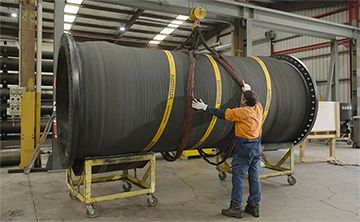
Australian Built, Large Bore Dredge Hose for Brine Pond Expansion
Our customer in the Middle East needed large bore hoses for a new brine pond expansion.
We manufactured these massive DN1500 hoses and expansion joints for a dredging project.

3 Ways to Reduce Wear in a New Slurry Pipeline
Minimise wear in a slurry pipeline at the design stage. Learn about three ways you can iron out the kinks before they become a big problem later on.
Talk to a hose specialist
Got technical questions? Need some advice? Our slurry hose specialists are here to make your job easier.
Less downtime. More throughput.
Solve slurry piping maintenance problems for good. Our audits help you get your plant running smoothly.